physician, heal thyself
 |
| A gathering of cardinals |
Origin: the Bible, Luke
4:23 (King James
Version)
“And he said unto them,
Ye will surely say unto me this proverb, Physician, heal thyself: whatsoever we
have heard done in Capernaum, do also here in thy country.”
Some might say that the unraveling of the Roman
Catholic Church began with the election of Jorge
Mario Bergoglio as the 266th pope (on March 13, 2013 by 115 cardinals on
the second day and fifth ballot of the cardinals’ conclave).
That election, they might say, effectively put an end
to what had been dubbed ‘Holy Silence’ on perhaps the most outlandish religious
hypocrisy in the world. More than any other faith, the Roman Catholic Church,
hiding behind ‘a veneer of holiness,’ has been assertive in projecting its
views on world affairs, society, religion, and politics, while at the same time
stifling its own scandals as if its conduct can’t and shouldn’t impact its
views.
 |
| St. Peter's Square - Vatican City |
The election of the Argentine Jesuit exposed that
hypocrisy. It was the first time in history that the church elected a Jesuit
Pontiff, a surprise given that Jesuits have historically served popes rather
than become popes. “In a sense, having a Jesuit pope is rather like having a
civil servant as prime minister,” Jon Anderson wrote in the Catholic Herald
magazine. It should therefore not have come as a surprise when, for the first
time, a reigning pope ignored the Holy See’s security concerns and stepped
across St Peter’s Square in Rome to mingle with regular folks, shook hands with
stunned passersby, telephoned ordinary people at home to express his solidarity
with their plight and quite compellingly, chose to simplify the extravagant
papal wardrobe. In the true spirit of a Jesuit, Pope Francis ditched the ‘holier
than thou’ aura that had, in all of the church’s checkered history, closeted pontiffs
under a shroud of mystery like an unfathomable cocoon, and by so doing, made
himself, for all intents and purposes, a common mortal.
 |
| Pope Francis |
Since his election, the pope has gone to great lengths
to reform the church, telling bishops that he wanted a church that was humble
and poor, and not obsessed with preaching doctrine or acquiring power. He explained
that Christian doctrine wasn’t a closed or rigid system but rather one that
lives and changes and develops. Speaking on November 11, in Florence, Italy, to
bishops and delegates of 226 dioceses of the Italian Episcopal Conference, he
said Christians shouldn’t be obsessed with power, “even when it takes the shape
of a power that is useful to the social image of the church.”
 |
| Pietro Vittorelli - ex-abbot |
 |
| Montecassino Abbey |
It must be one of the tragic ironies of the church that
while he was giving the above exhortation, the Italian media was erupting with news
of the theft of half a million €uro at Montecassino Abbey in Rome by its former
abbot, Pietro Vittorelli. Appointed the 191°
abbot by Pope Benedict XVI (Pope Francis’s
predecessor), Vittorelli, in a classical case of saying one thing and doing
another, once told an Italian newspaper, “We
are not the owners of the goods we possess, we are only administrators.” But between 2007 and 2013, according to the Italian Financial
police, the former abbot, with uninhibited access to the coffers of the Montecassino abbey, connived with his brother, Massimo, to systematically
steal the funds rather than administrate them.
This event was neither “the last nail in the coffin” nor
was it any more heartbreaking than the rest of the mind-boggling scandals emanating
from this figurative home of saint-makers—unabashed abuse of minors spanning
decades, rampant pedophilia & cover-ups, internal power struggles, theft of
secret documents, financial malfeasance, subtle political intrigues, corruption,
excesses of prelates, alleged involvement of the Vatican Bank in money
laundering for the mafia and former Nazis as well as funding priests caught up
in sex abuse allegations.
 |
| The Sistine Chapel (Getty) |
Given the vast wealth of the Vatican state, it might
seem a little difficult for prelates not to succumb to temptations, except
that, unlike lay politicians, they are religious figures who had sworn fealty
to both honesty and the simple ways of life taught by Christ. Their
congregation therefore should be able to take their complete disregard of
materialism for granted. Ironically, the failure of prelates to overcome these
temptations is matched by an eagerness to scold society about the same ills,
which brings the following Bible verse to mind.
Luke 6:41-42 “…41Why do you look at
the speck that is in your brother’s eye,
but do not notice the log that
is in your own eye? 42 Or how can you say to your
brother, ‘Brother, let me take out the speck that is in your eye,’ when you yourself
do not see the log that is in your own eye? You hypocrite, first take the log
out of your own eye, and then you will see clearly to take out the speck that
is in your brother’s eye.”
 |
| Cardinal George Pell |
Many Catholic watchers believe that if
prelates practiced what they preach, they’d direct the wealth of the church
to the needy rather than continue accumulating same. The Vatican,
according to the prefect of the secretariat for the economy, Cardinal George Pell, is so wealthy
it can stumble across millions of €uros just ‘tucked away’ off of its central
balance sheet. “It is important to point out that the Vatican is not broke,”
Cardinal Pell wrote in an exclusive article in the Catholic Herald. “Apart from
the pension fund, which needs to be strengthened for the demands on it in 15 or
20 years, the Holy See is paying its way, while possessing substantial assets
and investments.”
 |
| Inside the Apostolic Palace (Eric VandervilleGamma) |
Reporting in the International Business Times, Shane
Croucher, wrote, “Vatican City itself has a rich
economy relative to its size. Though data is scarce, and the exact GDP figure
is unknown, the CIA estimates Vatican City’s 2011
revenue to be $308m. It only has a population of 800 people, meaning its
nominal GDP per capita is $365,796 – making it the richest state on the planet
by this measure... And much of its assets are
near impossible to value because they will never be sold off, such as its
gold-laden palatial church property and priceless works of art by the likes of
Michelangelo and Raphael. It also owns a global network of churches and
religious buildings, many of which contain precious historical treasures,
serving the world’s 1.2 billion Catholics. What we do know is that Vatican Bank,
officially titled the Institute for the Works of Religion, manages €5.9bn
($7.3bn, £4.64bn) of assets on behalf of its 17,400 customers. And it manages
€700m of equity which it owns. Another tidbit to emerge is that it keeps gold
reserves worth over $20m with the US Federal Reserve.”
 |
| Pope's residence |
In spite of this enormous wealth, the new pope has
kept his focus on what should matter most to the church—faith.
His simplistic lifestyle, in fact, was evident even as a cardinal in Buenos
Aires, where he abandoned living quarters in the elegant archbishop’s residence
for an austere room elsewhere. He has maintained the same attitude as pope,
shunning the luxurious papal apartments in the Apostolic Palace in Rome and
taking up residence instead in a small suite in the Domus Sanctae Marthae
building adjacent to St. Peter’s Basilica in the Vatican City, which presently
functions as a guesthouse for various clergy having business with the Holy See,
and as the hotel residence of members of the College of Cardinals when they
participate in a Papal Conclave to elect a new pope.
 |
| The Pope's Renault 4L |
Further, the pope gave up use of his official Mercedes-Benz
known famously as Popemobile, choosing instead to travel in a 1984 Renault 4L, which
was given to him as a symbolic gift of his humility by Don Renzo Zocca, an
Italian priest who works with disabled people, the poor, and drug addicts in a
working class neighborhood in Verona in northern Italy. So far, all attempts by
the pope to convince prelates to follow his example have proved fruitless, and people
are baffled that since becoming pope, he has devoted a great deal of time and
energy preaching to fellow preachers almost more than to lay people. This,
observers say, indicates how far away the church is from its core value.
 |
| Cardinal Bertone |
Early this year, when news emerged that Cardinal
Tarcisio Bertone, a former secretary of state, and for a brief period
administrator of the Holy See and acting head of state, was building a
luxurious penthouse for his retirement, rumors were rife that Pope Francis was
furious. A newspaper report about the project said refurbishment involved
merging two existing flats: one of between 300 and 400 sq meters (previously
assigned to the head of the Vatican gendarmerie), and another of around 200 sq
meters (belonging to a deceased prelate). A photo published by Italian gossip
magazine, Chi, showed the renovation
atop the Palazzo San Carlo building, a palatial home with scaffolding soaring
as high as four storeys around the entire penthouse complex in contrast with
the meager lifestyle the pope has been promoting.
 |
| Penthouse of the scandal (Chi) |
Though the pope has not made any specific comment
about it, a sermon he delivered shortly before Easter, carping about “unctuous, sumptuous, presumptuous”
clerics was interpreted by many in the press as revealing his reaction to
Bertone’s project. In the past, the pope had warned against church leaders who
bear the “psychology of princes,” also blasting “airport
bishops” who spend more time jet-setting than tending to their flocks. In an
Apostolic Exhortation, Evangelii Gaudium,
to bishops, clergy, and lay faithful, he said, “God save us from a worldly
church with superficial spiritual and pastoral trappings!”
Prelates, it seems, turn a deaf ear to these
exhortations. Cardinal Bertone’s palatial retirement home, dubbed “penthouse of scandal,” is not the only one causing raised
eyebrows. An investigation by CNN’s DanielBurke revealed that at least 10 of the 34 active archbishops in the United
States defy the Pope’s example and live in residences worth more than $1
million.
 |
| Bishop Tebartz-van Elst |
Nicknamed the “Bishop of
Bling,” he was suspended by the Vatican and placed under investigation after
spending $43 million to renovate his residence in Limburg, Germany. Tebartz-van
Elst, known as theologically conservative, denied any wrongdoing, saying that the
cost of the renovation was legitimate because surrounding structures had to be
protected, including the old city wall. But many people in Limburg do not
approve of the bishop’s excesses. “He built his
office on lies,” a Limburg resident, Patrick Dehm, was quoted by the CNN as
saying. “This must come to an end. The diocese doesn’t deserve this.”
 |
| Version published by Dr. Fukushima |
And now, as if the world hasn’t had enough of Vatican scandals
and intrigues, a new element has entered the fray—an
alleged plot to discredit the pontiff. The shocking headline was unleashed,
like lightning, on the Vatican and the world at large recently by an online
newspaper, QN—Quotidiano Nazionale—Pope Francis has a brain tumor. It said
the tumor was diagnosed by the world famous Japanese
neurosurgeon, Takanori Fukushima, who was summoned to the Vatican.
 |
| Version published by Vatican |
“It is false,” said Father Ciro
Benedettini, deputy director of the Vatican press office. “It is totally
unfounded.” Dr. Fukushima has also categorically denied it, saying he had met
the pope only once, and not privately. In a curious twist, though, a photo he
had published on his blog of that meeting, which showed him, alone, shaking
hands with the pope, was quickly removed when it turned out it was photo
shopped after the Vatican’s
official newspaper, L’Osservatore Romano, published the same photo, showing the
Japanese neurosurgeon surrounded by a large crowd in St. Peter’s Square as he shook
hands with the pope.
Trying to make sense of the
stranger-than-fiction story, the Italian newspaper, Libero, wrote that the release
of such hurtful news might have been triggered by two recent events, firstly,
the bitter discord that marked the final week of the Synod on family and
reform; secondly, the media attacks on the pope that was followed by a leak of a
highly critical letter penned by angry cardinals to the pontiff.
 |
| Luigi Bisignani |
Someone else has a different view. Luigi Bisignani, a former Italian journalist
and fixer, generally regarded as a “manager of hidden powers,” said the release of
the news was part of a plot by the Opus Dei to discredit the pope, suggesting
that there is, in fact, an ongoing rivalry between Opus Dei and the Jesuits. “The
first think they are the Jesuits of the third millennium, but the latter have
the pope in their ranks.”
Bisignani’s allusion to someone with a connection to the anti-Bergoglio plot, according to an online publication, infiltrato.it, was a clear reference to Monsignor Lucio Angel
Vallejo Balda, a former Jubilee Secretary of the Prefecture for Economic
Affairs, with ties to Opus Dei, the “desperate moves by a former powerful
Spanish monsignor from whom the Vatican even took the precaution of cutting off
his service phone.”
 |
| Monsignor Lucio Vallejo Balda |
Six months ago, Bisignani, the publication
said, had revealed an anonymous letter threatening Jorge Bergoglio (“St. Peter’s Square will soon be purified with your blood,”) packed with details of the engagements of the pope, the
Cardinals of the Curia, and the operators and envoys of the major basilicas and
sanctuaries, with “a well updated pontifical annual report.”
Will Pope Francis live long enough to save
the church from itself or is it enough to call on the ‘physician to heal thyself’?
 |
| Pope Francis poses with cardinal advisers during a meeting at the Vatican. From left: Chilean Cardinal Francisco Javier Errazuriz Ossa; Italian Bishop Marcello Semeraro, secretary to the Council of Cardinals; Indian Cardinal Oswald Gracias; German Cardinal Reinhard Marx; Pope Francis; Honduran Cardinal Oscar Rodriguez Maradiaga; Italian Cardinal Giuseppe Bertello; U.S. Cardinal Sean O'Malley; Australian Cardinal George Pell; and Congolese Cardinal Laurent Monsengwo Pasinya. (CNS/Reuters/L'Osservatore Romano) |
 |
| The Argentine Jesuit, Jorge Bergoglio, who became Pope Francis |


 According to the Middle East Research and Information project, “Over the last decade, the Middle East has become a focal point of the world arms buildup. Each year, the regional arsenal grows, as the United States, the Soviet Union, France, Britain and others ship billions of dollars worth of weapons to the countries there.” In August this year, the Mirror—a UK newspaper—published what it described as the scandal of Britain’s £6bn arms deals with war-torn Middle Eastern countries which could fall to ISIS. It included, the paper said, £15 million in sales over the past five years to embattled Libya, large parts of which are already controlled by a vicious terrorist group. In Italy, the Rome-based newspaper, Il Messaggero, reported that Italian arms exports to Islamic countries are worth a whopping €2.5bn.


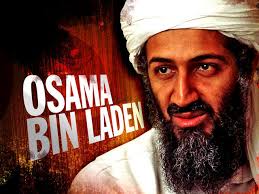 Global Research, in an online article titled: “We created Al Qaeda,” said that the protagonists of the “Global War on Terrorism” are, in fact, the terrorists.
Citing Clinton’s successor at the State Department, John Kerry, as being in direct liaison with Al Nusru, an Al Qaeda affiliated organization in Syria, (integrated by terrorists and funded by the US and its allies), the publication said as follows:
Global Research, in an online article titled: “We created Al Qaeda,” said that the protagonists of the “Global War on Terrorism” are, in fact, the terrorists.
Citing Clinton’s successor at the State Department, John Kerry, as being in direct liaison with Al Nusru, an Al Qaeda affiliated organization in Syria, (integrated by terrorists and funded by the US and its allies), the publication said as follows: 


