Thursday, August 31, 2017

Freedom of Speech & Charlie Hebdo


“I may not agree with you, but I will defend to the death your right to make an ass of yourself.” 
- #Quote

Not many people outside France knew about the existence of satirical French magazine, Charlie Hebdo, before January 2015 when two gunmen who claimed allegiance to Al-Qaeda stormed the offices of the publication and killed 12 people including the editor and the magazine’s star cartoonists. The killing provoked outrage across the world, and in France, hundreds of thousands of people marched through the streets in defense of the right to free speech. On the radio, television, and in newspapers, supporters of freedom of speech/freedom of the press—from Italy to the US—adopted the now famous slogan and logo, “Je Suis Charlie” (I am Charlie), created by French art director Joachim Roncin, and rose in condemnation of the killers for their intolerance of free speech.

But last year, in the aftermath of the deadly Italian earthquake, not many people held the same view when the magazine ridiculed Italy’s collapsed houses by likening them to pizzas and suggesting they were built by the mafia. No matter, the magazine, it seemed, continued to test the limits of people’s defense of free speech. In the wake of the terrorist attacks in Manchester during an Ariana Grande concert last June, it published a cover featuring a decapitated British Prime Minister, Theresa May, with a header, “Multiculturalism, English style.”

This week, the publication is at it again. Its latest cover depicts Texans who drowned in the flood waters caused by the tropical storm, Harvey, as Nazis. The banner headline, “God Exists! He Drowned All the Neo-Nazis of Texas,” seems to be the magazine’s take on the ongoing White Supremacy debate in the United States, apparently ridiculing Texas for voting for Donald Trump in the 2016 presidential elections seeing as he has been criticized for failing to condemn the neo-nazis and white supremacists during a riot in Charlottesville that killed one protester.

This latest cover has sparked controversy in the US, generating angry reactions on social media. In France, former minister of Agriculture and Socialist MP, Stéphane Le Foll, called it “extremely dangerous.” 


But a few others have wondered why there is so much outrage regarding this particular cover. Some even ask if the satirical cover was more controversial than remarks made by conservative commentator, Ann Coulter which suggested that Hurricane Harvey may well be God’s punishment for Houston’s election of a lesbian mayor.  

Whatever your position on the matter, Charlie Hebdo thrives on satire. The publication, rightly or wrongly, goes out of its way to provoke angry reactions from its targets. Over the years, its cartoons have catapulted it into international headlines and caused outrage especially in the Islamic world, with some calling for its editors to be killed. More than that, it has brought to the front burner a debate on the freedom of speech. Is it acceptable for defenders of the right to free speech to decide, on the basis of particular targets, whether to say “Je Suis Charlie” or “Damn you, Charlie Hebdo?” The other question, though, is: How far is too far? Or, is there such a thing as a limit to freedom of expression?

“I disapprove of what you say, but I will defend to the death your right to say it.”  
S.G. Tallentyre 

“If liberty means anything at all, it means the right to tell people what they do not want to hear.”  
George Orwell

“If freedom of speech is taken away, then dumb and silent we may be led, like sheep to the slaughter.” 
- George Washington

Tuesday, July 4, 2017

Political Tantrums & Media Hysteria

Something is happening in the U. S. that should alarm you, and it’s not Donald Trump.

Many believe, rightly or wrongly, that the mainstream media in the U.S. have been unwittingly complicit in the political fortunes of Donald Trump—from their obsessive coverage of his oddball campaign in the 2016 presidential elections and their nitpicking of his outlandish pronouncements to their hysteria over his unexpected victory. Reporting or criticizing Trump, without a doubt, has been the media's money-maker for about a year now. In fact, since Trump's inauguration in January, his political tantrums and the media’s hysteria over them have "stolen the show" again and again in the United States. 

Jamie Raskin (D)

It all came to a head, or so it seemed, on the weekend of the Fourth of July—America’s Independence day—when the 25th Amendment hashtag began to trend on Twitter. Many users, seemingly ‘inspired’ by Jamie Raskin, a Democratic congressman’s plan to introduce a bill to establish an oversight commission on presidential capacity, tweeted their reasons, logical and illogical, why Trump should be removed from office, using the #25AmendmentNow hashtag. This came after a week of heightened Twitter feud between the president and the media which culminated in a video tweet of Trump beating up a CNN logo, posted by Trump.

Trump / Pence
As with everything Trump does, the video generated widespread attention, with the media, of course, considering it a solicitation for violence against the press. Sadly, events like this have happened over and over again since January and the media have continually revised the definition of ‘new low’ for Trump. Observers say this hysteria is precisely what propelled Donald Trump to political stardom in the first place.
The media, by dwelling on every little, sometimes irrelevant, tweet or conduct of the president, merely magnifies them, thereby offering Trump the distraction he needs from some of his pressing nightmares. A case in point, they argue is the ‘overzealous’ practices of CNN, which Trump repeatedly calls Fake News. Until recently, the network took a near insane pleasure hosting Kellyanne Conway, a Trump adviser, interviewing her and then criticizing her for providing “Alternative Facts,” only to host her again and again. CNN recently stunned itself by publishing on its website and then retracting a damaging story about Trump, with a resultant resignation of three of its journalists.
Trump rally

Beyond the hysteria, the media, lured with the bait of Trump’s political tantrums, are refusing to pay heed to one important factor—Trump’s unwavering support base. It is worth noticing that in spite of everything, including a low approval rating according to polls, which, in the past, have proved to be unreliable, the anti-Trump hysteria doesn’t seem to reflect the mood of a large part of the country. 
Obama
It hasn’t turned GOP voters away from their party in the by-elections held this year. And the Democratic Party, which has been methodically stripped of power since 2008 are still unable to tip the political pendulum back in the other direction despite Trump’s ‘unraveling.’ According to Townhall, even with hefty financial  investments and high-profile Democrats lending star power to state-level candidates, the GOP has won control of every district they previously held across multiple states that Democrats have won in the last three or more presidential elections. The most prominent, of course, was the House special election in Georgia, which was largely seen as a referendum on Trump. That too went to the Republicans.

What’s more, for a supposedly reviled president, Trump’s tweeted video of his fight with the CNN logo, at the time of writing this, got 520k ‘likes,’ 315k retweets, and 137k replies. Why is this important? Well, it's important because democracy is a game of numbers and Trump seems to have the support he needs in terms of numbers. Now, even if he is unfit to be president as critics say, the fact that he still enjoys wide support indicates the problem is no longer Donald Trump as a person, but the people who are standing by him, no matter what. There! The "no matter what" is where the problem lies because America had values or at least told the world it had values. In fact, over the years, it has consistently discarded candidates who fell short of those values. Yet, Trump has rubbished them all but continues to enjoy the support of many. This is a man who looks Americans in the eye and lies about everything and for some reason, his backers choose to ignore the values they once pretended to hold dear, even at the risk of being exposed as hypocrites.

Trump supporters
Contrary to suggestions that it was just the vote of the Alt-Right that put Trump in the White House, it was, in fact, the vote of ordinary Americans who did not know, until Trump came on the scene, that they were closeted racists who hated Mexicans (even the ones to whom they were married) and needed a wall to keep them out, that they approved of white cops killing unarmed black men and getting away with it, that Russians are actually friends not foes, and that conspiracy theories could be facts if they served your purpose.  

There’s a saying: “If someone fools you once, he is a fool; if he fools you twice, you are the fool.” So, in my view, Trump is not, and cannot be the problem since people, knowing the truth about him, continue to choose, in good conscience, to stand by him and give his rants a standing ovation. Rants which have nothing to do with making America great again, whatever that means.  

I have a theory about his unwavering support. And it's quite simple: Trump backers (and they are many) are those who have chosen to endure whatever nightmare policy he offers, including losing their healthcare, rather than give Democrats a victory of any kind lest it crosses their mind to put another black man in the White House. 

Yes, it's about race. And yes, it was sparked by muted anger over Obama's presidency. This unwavering support for Trump which seems to defy logic is rooted in the fear of "white extinction," masked by a fanatical love of country that'll, unfortunately, lead to a diminished American influence in the world. So, for once, let's call a spade a spade because something is happening in the United States that should alarm you, and it isn’t Donald Trump. 

Sunday, June 25, 2017

Literary Rejections

“If the book is true, it will find an audience that is meant to read it.”
- Wally Lamb

Sometimes Traditional Publishers Get It Woefully Wrong 


Traditionally, publishing—the activity of making literature and information available to the public—refers to the distribution of printed works, which, until the eBook revolution, made publishers the veritable gatekeepers of writers’ careers. Over the years, many publishers (and even literary agents), placed in a position to play god, made and broke literary careers through the most poisonous weapon in the book publishing industry: rejection letters. How times have changed! These days, rejection slips no longer have a sting. In fact, many writers neither have the time to bother with them nor feel a need to write query letters in the first place.

The advent of electronic publishing has not only empowered writers to assume control of their work, it has also effectively robbed publishers of the power of monopoly. Today, an author can make his/her work available to the public as an e-book or as a paperback or even as a hardcover book (by way of print-on-demand technology) with the ease of a bird in flight. It is called self-publishing. And, while the author bears the cost of editing, cover design, and promotion, s/he benefits enormously from the process—complete control of the work, full profit from book sales, and incontestable freedom to determine release date, format, cover price, et al. And it goes without saying that rejection slips from publishers and/or literary agents are no longer the bane of writers’ careers. Interestingly, even some traditionally published authors have begun to go ‘the indie way.’  

There is no doubt, though, that for writers still seeking to publish their work the traditional way, rejection letters remain a concern, partially because publishers, even literary agents, at times make poor judgments, mistaking potential best-selling books for manuscripts with no literary merit. While the most magnanimous of rejection letters exhort writers not to be discouraged, some have been cruel and utterly inexplicable. For example, when John le Carre sent the manuscript of his debut novel, The Spy Who Came in From the Cold, he was rejected and told “he hasn’t got any future.” Rudyard Kipling was told in one rejection letter that he “doesn’t know how to use the English language.” James Baldwin’s Giovanni’s Room was called “hopelessly bad,” and Richard Bach was rejected by 18 publishers who thought a book about seagull was ridiculous.

Another case in point is William Faulkner’s book, Sanctuary, which was rejected and called “unpublishable.” The novelist and literary critic, Malcolm Cowley, was said to have told Faulkner once in a letter, “In the publishing circles your name is mud. They are all convinced your books won’t ever sell.” But it wasn’t the last time publishers would consider a great book “unpublishable and unsaleable.” Jack Kerouac’s On The Road was described as “Frenetic and scrambled prose” and rejected by several publishers. As it turned out, they got it wrong. More than 50 years after its original publication, the book is still read, taught, and assigned in high schools and colleges all over the U.S., selling 100,000 copies each year in the United States and Canada and published in 32 foreign countries.

The fate of Ursula K. Le Guin wasn’t much different. Her 1969 science fiction novel, The Left Hand of Darkness, was rejected with these observations: “Ursula K. Le Guin writes extremely well, but I'm sorry to have to say that on the basis of that one highly distinguishing quality alone I cannot make you an offer for the novel. The book is so endlessly complicated by details of reference and information, the interim legends become so much of a nuisance despite their relevance, that the very action of the story seems to be to become hopelessly bogged down and the book, eventually, unreadable.” In spite of this observation, the book became immensely popular and established Le Guin’s status as a major author of science fiction.

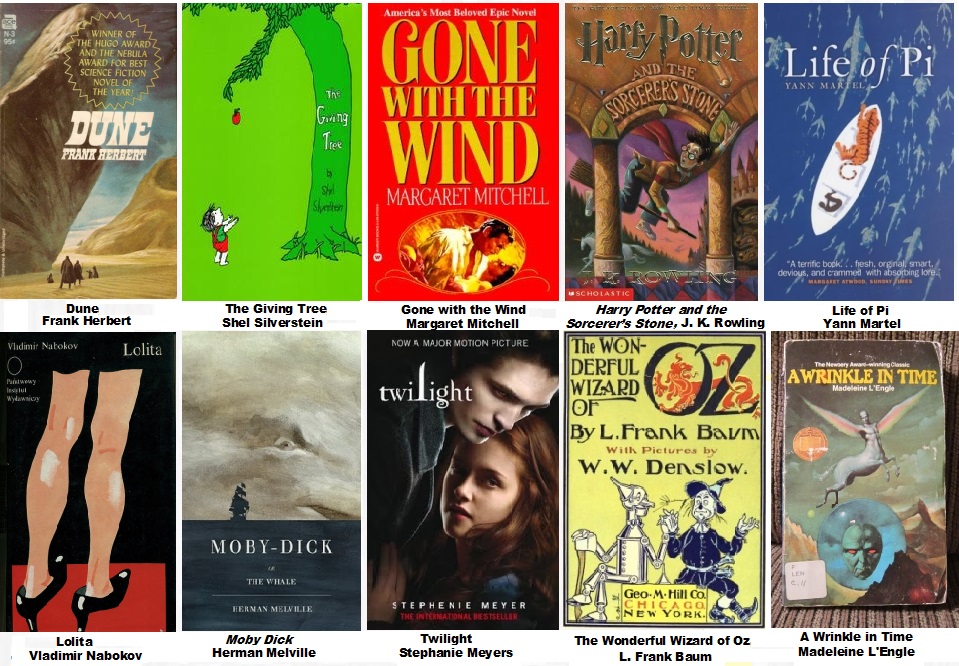
Ten Famous Books Rejected By Publishers
Now many writers are fed up with the short-sightedness of publishers and literary agents. Though some know they may not achieve the much-desired success in today’s publishing market which is saturated with books of different kinds, they prefer to self-publish rather than endure the humiliation of rejection by publishers/literary agents whose narrow view of the industry makes them unqualified gatekeepers.

A good example of this new approach to publishing is Marie Force, a romance best-selling author, who took the leap and became a beacon of hope to many indie authors. In a 2015 blog post by Ruth Harris, an industry insider, Force was quoted as saying: “Every romance publisher in the business rejected Maid for Love (book 1 in the McCarthy Series). I am thankful for every one of them now because if even one of those NO votes had been a YES, I’d still be working for someone else and wishing for the career I have now.”   

Tuesday, May 23, 2017

FUN IN THE SUN

BLACK GOLD JOINS  
MULTI-AUTHOR EVENT


Enter here


Prizes include:
  2 Kindle Fires
$50 Amazon Gift Card
$25 Amazon Gift Card
3 - $10 Amazon Gift Card


Tuesday, May 9, 2017

The Charlatans

How Reality Blindsided Anti-globalists


“It is better to die for an idea that will live than to live for an idea that will die.”

- Steve Biko 


Anti-globalization sentiments once had a voice, a bold, logical voice that was easy to relate to. That voice pinpointed the hardships inflicted on those who had been abandoned, ignored, or forgotten by the so-called principle of openness and internationalism. It identified the millions seared by unfair global trade deals that favor multinational corporations who evade taxes, close factories, and siphon jobs to places where labor is cheap and exploitation is overlooked. 

But this backlash, propelled by a rampant batch of populist politicians lost its way when they transformed the sentiments into a hate movement. So, anti-globalization became anti-immigration, anti-minority, anti-Islam, anti-LGBT, and blind, sometimes senseless, opposition to the Status quo. And now, it has lost its voice.


President Trump
Perhaps no other individual has aided the rise, and ultimately, the flop of such sentiments than the 45th President of the United States, Donald Trump. As a candidate, he railed against free trade, immigration, and foreign intervention. He promised to block illegal immigration from Mexico by building a wall, to call out China as a currency manipulator, to drain the swamp in Washington, to repeal and replace Obamacare with a cheaper healthcare system, and to put America first.

Geert Wilders
His victory at the polls gave impetus to populist politicians across Europe. In the Netherlands, the far-right politician, Geert Wilders, pledged to ‘de-Islamise’ the country by closing its borders, ban Islamic headscarves, close mosques, and ban the Koran. He also promised to take the Netherlands out of the European Union and stop public money going towards development aid, windmills, the arts, and innovation.

Marine Le Pen
In France, Marine Le Pen, daughter of the openly racist and anti-Semitic founder of the far-right National Front, Jean-Marie Le Pen, made similar pronouncements. Using traditional language to mask her ideas for a radical shift in France’s role in the world, she emphasized nationalism and a protectionist economy, promising to fight terrorism by closing the borders. She too promised to pull France out of the European Union.  

And in Italy, two populist politicians, Matteo Salvini of the Northern League and Beppe Grillo of the 5-star Movement, joined the bandwagon.

Matteo Salvini
Beppe Grillo
Then Trump’s presidency started, and it became immediately clear that he had fooled the world with his veneer of populism. Through hastily drafted executive orders, nonsensical actions, and remarks, he soon revealed himself to be a buffoon president. 

President Trump 
He did not drain the swamp; he filled it. He did not call out China as a currency manipulator; he embraced the country’s leader (and his Son-in-Law, Jared Kushner, has strong business ties there.) He shrank away from his non-interventionist position and bombed Syria. Though he bungled his first major legislative effort, he subsequently repealed Obamacare but replaced it with a nightmare of a health care plan, nothing near what he promised. He claimed the presidency was more complicated than he had imagined. 

His unrealistic budget plan almost caused a government shutdown, forcing him to withdraw his proposal to build the wall with Mexico (estimated cost: $67 billion). What’s more, in his first 100 days in office, he has spent nearly every weekend at his Mar-a-Lago estate, playing golf, which cost taxpayers an estimated $20 million. (In comparison, Obama’s cost $97 million in 8 years). 

Le Pen & Wilders
These flip-flops alerted voters elsewhere to the dangers of bogus populism. Just as in the aftermath of the Brexit vote, many people took another look at themselves in the mirror and the sight wasn’t pretty. On March 15, this year, voters in the Netherlands turned their backs on the populist Geert Wilders and voted for prime minister Mark Rutte

Last week, in the UK council elections, British voters obliterated
Nigel Farage
the UK Independence Party, UKIP, whose former leader, Nigel Farage, misled many into voting for Brexit. By the time the dust settled, the party had lost all but one of its 145 seats to the Tories. And last Sunday, France came to its senses too, when voters, even those who didn’t support Emmanuel Macron, voted for him to keep Marine Le Pen out of the presidential palace.

At long last, these populist politicians, exposed as charlatans and blindsided by reality, have lost their voice. And they didn’t see it coming.

Saturday, April 1, 2017

Tale of a Thriller !!!


From the Editors' Choice Award Winning poet & Book Awards Finalist: 

A "HYPNOTIC" POLITICAL THRILLER WITH AN EPIC COURTROOM SHOWDOWN.


A real "wow" factor! What's really scary about this story is that it's probably the kind of stuff that's happening right now and we don't know a thing about it. Fantastic read 

- READERS' FAVORITE

--------------------

This firecracker female lead--Rita Spencer--is a force of nature who drives her powerful enemies to their knees. She's smart, she's brave. She's sexy as hell.” 

- Tracy Edingfield, author of The Law Firm of Psycho & Satan

--------------------

 If you are looking for a good mystery/thriller, with an incredibly strong  female character, this is definitely the book for you!” 

- Teresa Kander - Freelance writer, poet, reviewer

--------------------

THE CONSPIRACY OF SILENCE 

A depiction of the life-and-death struggle of a young female lawyer who goes to great lengths to outwit a diabolical trio in order to save her lover from a murder rap

--------------------

 The character of Rita Spencer is crafted with astute perfection. A woman with  high self-respect, smartness, brilliance, style, compassion, impetuous and  sincerity; she grabs the spotlight from numerous characters hovering around the storyline.” 
- Rakhi Jayashankar, Outset Blog - http://ow.ly/TySDK 

--------------------

CHARACTER PROFILE 

Rita Spencer - An introverted young lawyer is thrust into the spotlight she's dreaded all her life by an unexpected murder for which her lover is accused...

Quote

I believe I’m more equipped than you to take the risk. You are a respected attorney and I’m an orphan, twice for that matter, I lost my biological father while still a kid and my stepdad just when I was getting to know him. Now, I’ve lost my home with everything in it, including an innocent life. Can you understand now? There’s only one thing left and that’s the man I love, who is being framed for a murder he did not commit—whatever else his shortcomings are—and for that, Marty, I’m willing to die.

--------------------

 “Rita is a surprise element and her character has been well shaped. She is the embodiment of a modern woman - beautiful, stylish, independent, career oriented, intelligent, intuitive, loving and thoughtful.” 

- Sheryl - Book reviewer, Texas


--------------------

  What lengths would you go through to save the man you love? That's what Augustine Sam shows us in The Conspiracy of Silence. I like to read a good mystery novel every now and then, and this one did not disappoint.

    - T. L. Coulter - author  


Book Description

The conscience of a town steeped in sexism, vanity and hypocrisy is pricked by the brutal murder of a mysterious woman in a park in Los Angeles. But the shock is transformed into a steamy, seductive scandal when the body turns out to be that of Susan Whitaker, the flamboyant wife of the governor of California.

Soon, a dazzlingly intricate shuffle of volatile links leads the police to the delicate theory of a secret lover/blackmailer, and to the indictment of Benjamin Carlton, Hollywood’s most influential black celebrity.

Then curious things begin to happen when Carlton’s ambitious girlfriend, Rita Spencer suddenly unearths the shocking secret that Susan Whitaker, in fact, did not exist. She little realizes that her discovery of this colossal fraud is a mere curtain raiser to a chilling world of ugly skeletons dating back to the assassination of a U.S. senator in a Washington hotel sauna, skeletons connected to riveting sex scandals in high places, skeletons the FBI and political kingmakers will kill for…

THE CONSPIRACY OF SILENCE 

Book Excerpt


A RenAfrique Feature

"An exposé on the murky world of high-stakes politics and its attendant scandals..."


The Book Adventures of Emily Blogspot