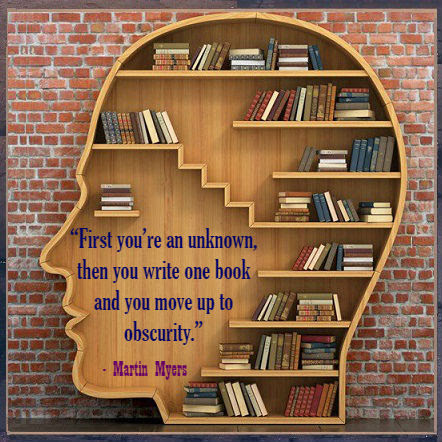
“If
nobody talks about books, if they are not discussed or somehow contended with,
literature ceases to be a conversation, ceases to be dynamic. Most of all, it
ceases to be intimate. It degenerates into a monologue or a mutter. An
unreviewed book is a struck bell that gives no resonance. Without reviews,
literature would be oddly mute in spite of all those words on all those pages
of all those books.”
~ Patricia Hampl
The reality of the publishing industry today,
particularly for indie authors and writers with small publishers is that
gaining recognition in a crowded marketplace with hundreds of new titles
released every other month, has become a struggle. Getting written reviews on
such websites as Amazon and Goodreads, therefore, is an excellent way of making
their work stand out. Unfortunately, though, it can also be the quickest way to
get their work trashed, and their reputation as authors tarnished by toxic
reviewers. In recent days, stories have proliferated online that some trolls on
Goodreads who’ve been posting one-star reviews on books, sometimes without even
reading them, have demanded payoffs from authors to remove them.
Authors have no
control over what readers think of their work, and that’s fine as long as
readers are honest. Honesty, in this context, does not necessarily mean
positive feedback, but it also doesn’t have to mean an unwarranted attack on
the author. While criticism is an integral part of publishing, a dislike for a
particular book does not justify ridiculing its author. In the same vein, a
writer’s crave for recognition does not justify paying for positive reviews.
Not only does this mislead potential readers, but it also deprives the authors
themselves of a fair and balanced appraisal of their work. As the American
journalist, Jack Shafer noted in his 2005 piece, Fair Is Square, “… book reviews aren’t yearbook photos for authors
to treasure. They are for readers.”
But that appears
to be a memo some authors have not received. Not only do they indulge in the
now frowned upon practice of review swaps, some, ignoring the reputable review
groups on Goodreads, partake in toxic review exchange groups online where, as
someone puts it, “anything less than a four-star review is flat-out rejected
and considered harsh and unhelpful.” The trouble with this practice is that
those who relish being flattered by their fellow authors deny themselves the
chance to learn of any structural weakness in their work that might need
attention. Since books are written for the public, eventually, real people will
buy them, and if they find such books to be mediocre works, not only will the
authors lose credibility, but they’ll have to face the disappointment of their
readers which might manifest itself in angry one-star reviews on Amazon. If
many readers, decrying the deception, leave such reviews, it’d inevitably call
the authenticity of the earlier positive reviews into question.
Another negative
aspect of certain review exchange groups is that since members do not get to
choose the books they must review, some end up with genres they have no
affinity for, which often deprives the book’s author of unbiased feedback. It
is also interesting to note that outside of these review exchange groups, while
authors crave positive reviews from readers, they are sometimes not equally
generous in their reviews of other writers’ works. There are cases in which
authors take issue with certain characters in a book, and strangely enough,
based their review of the book on the bias they have towards the character
rather than on the literary merit of the book.
Now the industry
is riddled with so much bias that some readers claim they are no longer swayed
by the reviews they read on Amazon or Goodreads. Having bought books on the
strength of the starred reviews, only to find the writing quality wanting, a
new reality is dawning on many readers. Yet, these starred reviews continue to
determine which books are promoted, and to some extent, which ones are bought.
Fairness—once the hallmark of literary assessment of
fictional works—has been
thrown out the window, and replaced by an obsession with star numbers,
resulting in the exaltation of 5-star reviews as a sign of literary excellence
while all the others are considered worthless, except perhaps 4-star reviews
which are generally accepted as just fine. One fact, though, remains
unchangeable - if a book has no literary merit, its five-star reviews—be they
from friends and family or from literary magazines that thrive on paid
reviews—can not give it the core it lacks. And if a book is excellent, no
single-star review posted by a biased reviewer or by a disgruntled author
envious of another’s work can rob it of its substance.
It’s no secret that when indie publishing started no one took it seriously. Even trade publishers who, at first failed to recognize it as a veritable threat to their hitherto uncontested monopoly, dismissed it as a fad anyway. But a fad it was not. The digital revolution had come to stay. All of a sudden, newly empowered indie authors found themselves competing as equals with well-established traditionally published authors, many of whom were bestsellers. But it was not an easy ride at all. Indie authors lacked the necessary exposure, the distribution outlet, and the budget to compete effectively with the big names, so they decided to pick their battles wisely - ignoring paperbacks and concentrating instead on ebooks which were easier to distribute online.
In order to level the playing field, indie authors who transformed themselves into marketing gurus overnight came up with an idea that seemed brilliant at the time - a free ebook giveaway to stimulate demand and gain market share. It worked well at the beginning as such initiatives are wont to, however as many indies entered the fray, the situation changed. As a result, not only were indie authors competing with their traditionally published counterparts but now they were competing with other indie authors as well who, like them, were giving their books away for free, for the same reason.
Fast-forward to today where Amazon and other online book retailers are so filled with free books that many readers don’t see a reason why they should spend money on books. In fact, even the rationale that giving out free books guarantee reviews does not hold true anymore. The bitter truth is that many readers now have their Kindle and other reading devices so stacked up with these freebies that they don't, in fact, feel compelled to leave a review in exchange for a free book. They now expect free books with no conditions attached. Interestingly, that’s what the book promotion sites that now proliferate the web promise them. As one author noted, “Why should they buy the milk when the cow is free?”
The writing community has debated the issue time and time again with no clear solution. One multi-genre author holds the view that book promotion sites have been brainwashed to think that it does not cost authors anything to give away copies of their ebooks. “It demonstrates the mentality of the public, and I’m sad to say that Indies are responsible for this misguided mentality,” she says.“These promotion sites don’t care if you give books away for free. They want you to give books away for free and purchase their promo to do it.”
Regarding the argument that the strategy isn’t new because even traditional publishers often give out hundreds of ARCs, she asserts that they, in fact, give out ARCs to reputable reviewers, not to the general public. Even in cases where the public has access to the ARCs, for example, through NetGalley et al, she believes these publishers have a huge promotional budget as well as the tools to manage the outcome, but indie authors are generally disadvantaged when their books get pirated. As if to buttress her argument, a recent report revealed that members of a well-known review site were caught sharing ARCs—the hard work of many authors—with their friends and families, works that were sent in for review but ended up pirated.
So, has the FREE book marketing strategy turned out to be a boomerang against indie authors? Some think so. “People read books they pay for,” another author said, rubbishing the notion that free books help authors get reviews. She revealed a little experiment she did which seemed to confirm her idea. In it, she offered the first of her four-book series for free. It generated nearly 8000 downloads (and less than 20 sales of the other books in the series) but no reviews. For her, the reason was simple - the downloaded books were not read. “People aren’t shy about posting bad reviews, especially for free books,” she explained. “Readers are greedy and will scoop up free books, but never read them.”
To verify that claim, she put a $0.99 price tag on the book she previously offered for free—the first book in the series—and got nearly 180 downloads (and more than 30 sales of the other books in the series). A few of the readers left reviews and the result astounded her. “Readers don’t read free books unless they are from a big-name author,” she said. “I find that readers will buy $0.99 books and actually read them. If indies stop offering free books, they might be surprised to see that people will actually cough out the ‘couch change’ and then really read their books. And leave reviews. Maybe it’s time for indie authors to stop shooting themselves in the foot.”
These days, debates are rife about the qualities inherent in good writing or the presumed lack thereof in some indie literature. Following a digital revolution which saw decision-making power slip from the hands of literary agents/trade publishers to individual writers, these debates have triggered a craving for the authentication of readers and the public at large. And this craving for authentication has sparked a kind of rat race given that the literary marketplace is congested. It, therefore, comes as no surprise that owing to the desire to stand out in the crowded marketplace, demand for book reviews have surged. Overnight, on book blogs and review sites, opinion leaders have risen to the challenge, some even charging a fee for their thoughts and ‘professional opinions.’ Interestingly, for many of the self-proclaimed experts, the huge demand for book reviews which sometimes borders on desperation seems to give them “a right” to heap praise and/or criticism, often undeservedly, on the ever-increasing output of indie publications. No matter, one fact remains unaltered - in a digital era where anyone can become a published author and a single eBook can be seen as a momentous achievement, little attention is paid to depth, quality, and technique. That’s partly because in this day and age, stardom - including literary renown - is social media-driven,and many readers, usually friends and family members tend to lap up whatever their beloved new author throws at them. In the past, a good piece of literature was recognized both for its timelessness and the power of the message it conveyed, which affected thoughts and feelings no matter what era or place it was set in. Not so today. Frivolity seeps through every fabric of society the way water seeps through the soles of boots, and this, as some believe, has permeated the arts and literature as well.
It is therefore not out of place to hold the view that not everything that goes through someone's mind ought to end up as a book, after all, a written work should have a keen aesthetic sense. It should be distinguished as a literary culture of value. Many say there is a difference between a writer and a storyteller. Marianne Moore puts it this way, “If technique is of no interest to a writer, I doubt that the writer is an artist.” Therein lies the difference, not only between a storyteller and a writer but also between a professional book and an amateurish one, for, while a writer uses written words in various styles and techniques to tell a story, a storyteller merely narrates events in words, sometimes in images and sounds as well. Of course, this is fine if the output is of tolerable quality. But what's the benefit of an indie revolution if the quality of literature is sacrificed for publishing freedom? While everyone can tell a story, not everyone can be a writer. According to Carlos Ruiz Zafón, “The only way you can truly get to know an author is through the trail of ink he leaves behind him. The person you think you see is only an empty character: truth is always hidden in fiction.” So, quality vs freedom, where does the indie publishing lean?
Quotes To Live By
---------------------
“All great truths begin as blasphemies.” - George Bernard Shaw “Art is either plagiarism or revolution” - Paul Gauguin
“Stories of imagination tend to upset those without one.” - Terry Pratchett
“Start with what is right rather than what is acceptable” - Franz Kafka
“I think you can leave the arts, superior or inferior, to the conscience of mankind.” - William Butler Yeats
A young, unassuming couple gets swept into international intrigue by an unscrupulous conglomerate
Lecture hall - Cà Foscari University, Venice, where the couple met.
Black Gold was an interesting read.
Cerebral at times, emotional too, but an accurate portrayal of life at all
times! Themes that held me throughout the
novel were:
Jessica Rhodes & Femi Adeola
The interracial marriage—the joy of being free to choose,
the pain of the disruption of relationships, of outgrowing one’s family, and of
missing loved ones who no longer understand who you have become. The
pain of knowing you cannot go back, that “Home” is no longer your home.
The unsettling environment of “the first ‘real job,’”
of being easy prey for the pawn movers, and knowing there is little you can do
to protect or defend yourself.
The plot centers around how two brilliant but
impulsive university students find each other from opposite sides of the globe,
and how these naive “babes in the woods” navigate the treacherous waters of the
corporate world while keeping their relationship intact. The pacing of the storyline fits
with the topic—no slow slogging parts!
A waterfront view of Lagos where the blackmail scene is set
The characters—Kudos to the author, the characters walk off the
page, from Femi and Jessica to the cigar-puffing
corporate CEO, and the confused parents who grieved, watching their son walk
away with his foreign bride.
The writing—I find the writing excellent. Sam is
able to draw word pictures that make a reader “see” the image the author has in
his mind. Although the reader might sometimes feel distanced from the action on
the page, almost as if he were in the narrator’s head, now and then the author drops
the reader right in the center of the emotion of the characters. For example,
the scene depicting Femi’s shock when he realized the job he had was not the one
he had signed up for—the moment he became
aware of his precarious situation, the sudden realization of how unscrupulous his
boss was, and how he could do nothing to stop the train he was on. That scene
was palpable! The editing was also excellent—no typo distractions or grammar confusions.
I appreciate a clean read.
Reviewed by Carol A. Brown Retired Educator | Midwest USA
Movie Book Trailer - Black Gold
Rosie Amber Roses are Amber Book Club
“I like the trouble this
interracial marriage caused when the couple met Femi’s parents and I enjoy the scenes
set in Italy; the author’s knowledge of the country make them believable. He
also puts his poetic ability to good use and there are lots of examples of this
in the descriptive sections.”
Venice - Home of Cà Foscari University
“Black Gold is
chock-full of lyrical imagery and metaphors. Frequently, the result is
beautiful.”
- J.W. George | Author
“The
language is flowery and evocative. Every scene, every setting, every action,
every emotion, is described in luxurious detail, with perhaps more similes than
I’ve ever encountered in a single novel.”
“Literature must be relevant to its
times. It must be both timely and timeless. It must resonate with the people
and the period in which it is set, and contribute to the discourse, political
or otherwise, as well as put events in their proper historical and social
contexts. It is my belief that fiction,
used properly, can be a very effective vehicle for expounding on real-life
issues. And they don't necessarily have to be politically correct.”
A psychological exposé on love, vengeance, and a heart-wrenching secret
Paige Lyman, an accomplished psychiatrist, is on the verge of madness but she doesn’t know it yet. The madness begins when she gets it into her head to write her memoirs. As her brilliant mind assembles bits and pieces of her life for the book, ugly skeletons, long forgotten in the closet, begin to rear their heads.
It had all begun with a simple act of love. And love, for her, was a blond-haired Irish boy named Bill, so when Bill abandoned her for priesthood the world around her collapsed. Seized by a different passion—vengeance—she seeks her proverbial pound of flesh in the beds of various priests.
… Until she meets Stern W, who sweeps into her life like a hurricane and marries her. It is not until he dies in a helicopter crash that she discovers the startling truth about who he really was. And now, transformed from psychiatrist to patient, Paige is plagued with damning memories she must decipher in order to be free.
Take Back the Memory is the saga of her compelling backward journey through her own life on a psychotherapist’s couch.
"An intellectual & emotional look into a broken mind."- Readers' Favorite
"Like the cheery whisper of an admirer after a heartbreak."
- Grady Harp - Hall of Fame | Vine Voice | Top 100 Reviewer
Character Profile
Paige Lyman is a gorgeous redhead. She's over fifty and now in semi-retirement, and is still an object of fascination to her daughter, Diane. She possesses the loveliest pair of legs on Riverside Drive, and when she wears skirts, which she does often, even young men from nearby Columbia University turn to stare. Diane is amazed that her mother's wonderful head of hair still causes whispers in elevators. What she doesn't know is that Paige had a very unusual childhood that is about to catch up with her. But neither of them are prepared for it ...
Critics Viewpoint - Take Back the Memory
"Often in the prologues of fine novels, the author introduces not only pertinent subject matter but also offers an aperitif of writing style that acts as an overture to the music that will follow. Such is the case with Augustine's Prologue - pay attention to the language... And that is all you need to know to embrace this new writer whose talent is immense. Poet and storyteller blend seamlessly in a drama that explores the human psyche and that thin line between living and experiencing life. Highly recommended."
- Grady Harp (Top 100 Reviewer)
What others say:
"This book is well written. The plot-line is easy to follow and the characters are well developed. While there are parts of the story that are sad and /or troubling, there is also happiness within. I loved the surprising twist at the end."
- Stephanie Lasley
Top 1000 Reviewer
"This was an absolutely fascinating story. The writing is excellent and filled with wonderful imagery from Paige's memories. The story opens with Paige's daughter concerned for her mother's mental state. She convinces her to see someone and the complicated, beautiful story is unraveled for the reader. This book is suspenseful, heart-wrenching and an emotional roller coaster."
-P. Benson [Top 1000 Reviewer]
Norm Goldman
“What makes this erotically charged tale an outstanding debut is readers can actually feel the protagonist leaping off the page and sitting in their living rooms describing the messy complications of her life. In addition, Sam's superb storytelling talent runs the spectrum from crafting a candid psychological exposé with tantalizing illicit sex scenes to a grim depiction of a scorned troubled woman who has suffered from long-term hurt. Another plus about this novel which makes it a pleasure to read is the ease, fluidity, the economy and tight structure, as well as the precision of Sam's prose which has a deft accuracy in its tone and execution. I would surmise that his outstanding poetic skills had a great deal to do with his ability to effortlessly spin quite a yarn.”
-Norm Goldman, Publisher Book Pleasures
A Blogger's Visual Perception of a Character
"Psychological Suspense at its best"
- Trang Tran (Book blogger)
"The story is about Paige, a famous psychiatrist who turns to a psychologist to seek help and identify the source of her trauma. The novel is spiced with a lot of Freud's notion of psychoanalysis including how events in childhood can determine someone's behavior, sexual desire and so on. This is very interesting to me as I am involved with psychology. It is an absolute gift to read an author who smartly inserts some psychology notions at the right moment into the story. Awesome read, great writing and the "coup" at the end is absolutely genius!"